
Germinated oat grass and sprouts
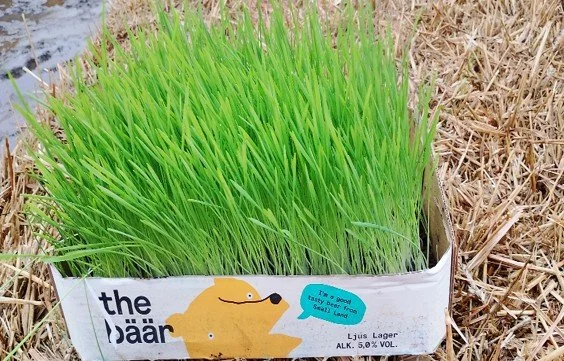
Oats grass grown with compost in cardboard boxes.
Compost worms are incredible recyclers, quietly transforming kitchen scraps into rich, living soil. But like any living creature, their health and productivity depend heavily on what they eat. One surprisingly powerful food source for compost worms is germinated oat grass grown directly in compost. This simple practice offers nutritional, biological, and environmental benefits that go far beyond standard food scraps.
Microbial Synergy: The Real Worm Superfood
Worms don’t actually digest food the way humans do. Instead, they rely on bacteria and fungi to break organic matter down first. Germinated oat grass excels here because living roots release sugars (root exudates) into the compost. These sugars feed beneficial microbes, causing microbial populations to explode around the root zone.
When worms graze in this area, they ingest both decomposing plant material and dense microbial life. This leads to faster digestion, improved gut health, and higher-quality worm castings. In short, oat grass doesn’t just feed worms—it feeds the entire compost ecosystem that worms depend on.
Improved Worm Health and Reproduction
This winter we have seen that a consistent supply of soft, nutrient-rich plant matter like oat grass can noticeably improve worm vitality. Well-fed worms are more active, maintain better body mass, and reproduce more readily.
Because oat grass is mild and non-acidic, it also avoids common problems such as overheating or sour compost conditions. This makes it a particularly safe food source, even in smaller or enclosed worm bins.
Nutrients in Oat Sprouts — and Why Beneficial Microbes Love Them
Germinated oats (oat sprouts or young oat grass) are far more than “green food” for worms. From a biological standpoint, they are microbial accelerators—rich in easily available nutrients and biochemical signals that directly stimulate beneficial bacteria and fungi in compost and vermicomposting systems.
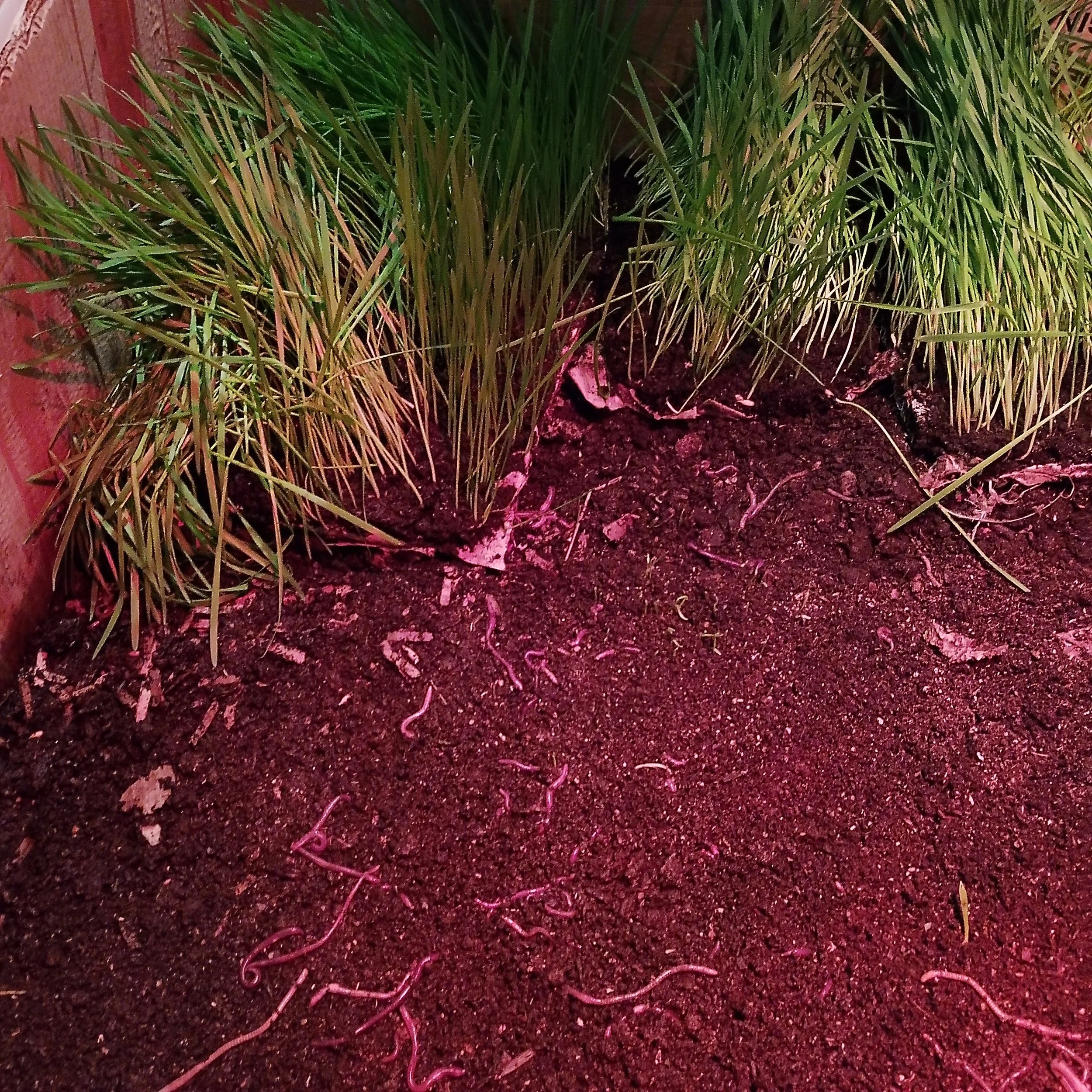
Oat grass as a food source for beneficial microbes & compost worms.
Quality food for producing premium worm castings for EWM Plant and Soil Nutients
Here’s a scientific-style explainer with citations on the nutrients in germinated oat grass.
Nutrient Composition of Germinated Oat Grass and Its Benefits to Microbial Communities
1. Germination Increases Simple Carbohydrates and Digestibility
During germination, cereals like oats undergo enzymatic activation where endogenous enzymes such as amylases break down stored starch into simpler sugars (e.g., glucose and maltose). This process increases the bio accessibility of carbohydrates and free amino acids, making nutrients more available compared with ungerminated grains. (PMC)
Relevance to microbe growth:
Beneficial bacteria preferentially metabolize simple sugars as energy sources because they require less enzymatic investment than complex carbohydrates. Simple sugars can fuel rapid microbial replication and the synthesis of extracellular enzymes that break down organic matter further, thereby accelerating organic matter decomposition.
2. Enhanced Protein Accessibility and Nitrogen Availability
Germination also activates proteolytic enzymes, increasing the availability of free amino acids and short peptides derived from storage proteins. (PMC)
Relevance to microbe growth:
Organic nitrogen (from amino acids) is a key limiting nutrient for many soil microorganisms. Amino acids serve as both carbon and nitrogen sources. They support the growth and metabolism of beneficial microbes such as decomposer bacteria, which are essential in nutrient cycling and the breakdown of complex organic substrates.
3. Activation of Bioactive Compounds
Oat grains contain bioactive compounds including phenolics and β-glucans; germination can increase the bioavailability of these compounds. (ScienceDirect)
Relevance to microbe growth:
Some microbes metabolize phenolic compounds as carbon sources while others use them as signaling or selective growth factors. Though the effects are complex, enhanced phytochemical availability can influence microbial community structure by stimulating certain microbial taxa over others.
Root Exudates: Microbial Recruitment and Soil Nutrient Cycling
Germinated oat grass produces root exudates—a complex mixture of sugars, organic acids, amino acids, and secondary metabolites released into the immediate substrate surrounding roots (the rhizosphere). (Wikipedia)
Plant exudates play several roles:
They provide labile carbon sources that attract bacteria and fungi.
They act as chemical signals that shape microbial community composition.
Organic acids in exudates can mobilize soil nutrients (e.g., phosphorus and nitrogen) that microbes and plants can use. (PMC)
The rhizosphere is typically much richer in microbial biomass than bulk soil because exudate molecules are abundant and easily metabolized by microbes—a process well documented in plant–soil interaction science. (Wikipedia)
Microbial Benefits of Sprout-Derived Nutrients
A. Carbon Flux and Microbial Respiration
Simple sugars and organic acids from oat sprouts and their exudates become readily metabolizable carbon sources, increasing microbial respiration and growth efficiency.
Bacteria often thrive on labile carbon, outcompeting slower-growing organisms.
Fungi, which can degrade more complex compounds, are also stimulated by increased carbon flow.
The enrichment of microbial biomass accelerates decomposition rates and enhances nutrient turnover in compost.
B. Nitrogen Cycling and Microbial Protein Synthesis
Amino acids and peptides from germinated oats contribute organic nitrogen, a key driver of microbial anabolic activity. Increased organic nitrogen can stimulate the growth of proteolytic decomposers and improve the balance between carbon and nitrogen in compost systems.
C. Microbial Community Recruitment and Assembly
Root exudates serve as both nutrient sources and chemical attractants for specific beneficial microbes. Plants can shape their surrounding microbial community by releasing compounds that:
Stimulate beneficial taxa (e.g., rhizobacteria involved in nutrient cycling).
Suppress pathogens through competitive exclusion. (PMC)
Summary
In scientific terms, germinated oat grass enhances compost microbial ecosystems by:
Providing labile carbon and nitrogen that feed microbes directly.
Offering root exudates that recruit and stimulate beneficial microbial taxa.
Increasing bioavailability of complex nutrients through enzymatic activation during germination.
These processes synergistically support greater microbial biomass and activity—key drivers of effective organic decomposition and nutrient cycling in vermicomposting systems.